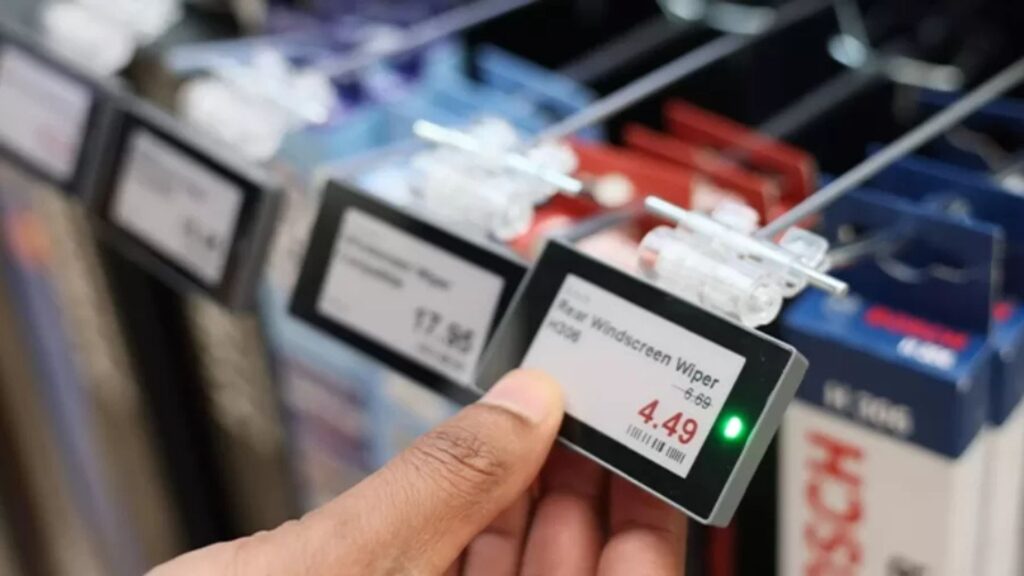
Digital Shelf Labels (DSLs) are a simple, modern replacement for paper shelf tags. They display prices set by the retailer and cannot adjust based on shoppers or outside inputs. Their value is straightforward: greater accuracy, smoother operations, and better support for frontline teams. HB 2481, introduced in the Washington House of Representatives, has made this a trending policy topic this session.
1. Improved Price Accuracy
Price updates that once required days of manual paper tag changes can now be completed in minutes. By syncing shelf labels directly with the point-of-sale system, DSLs help ensure customers see the correct price every time—an especially important benefit in states with strict pricing accuracy requirements.
2. Fewer Errors, Stronger Consumer Protection
Because DSLs update systemwide at the same time, they significantly reduce the chance of outdated or missing tags. This helps prevent confusion, mispriced items, and unintentional errors that can occur with manual processes.
3. More Time forHigherValue Work
Removing the need to walk the store replacing paper tags frees up associates to focus on what matters most: customer service, stocking, product freshness, online order support, and building skills that support long-term career growth.
4. Tools That Boost Efficiency and Accuracy
DSLs can also include features that make day today work easier and faster:
- Stock to Light: A small LED flashes to identify items that need attention, helping associates quickly locate the right shelf position.
- Pick to Light: Light-guided navigation helps team members find items for online orders more quickly and accurately.
These features can cut down on time spent searching for items, and support a more efficient, tech-enabled retail environment.
5. Built for Accuracy, Not Tracking
Despite common misconceptions, DSLs do not track customers. They are closed loop devices that simply display information. They include:
- No cameras
- No microphones
- No WiFi
- No Bluetooth
- No customer tracking technology
- No data collection or individualized pricing capability
Additional resources include:
- In June 2025, the National Institute of Standards and Technology NIST published NIST SP 1181-2025: Unit Pricing Guide – A Best Practice Approach to Unit Pricing ,authored by NIST’s Office of Weights and Measures (OWM) in collaboration with state regulators, trade associations, consumer groups, academics, and private sector retailers.
- Academics from University of Texas-Austin, University of California San Diego and Northwestern University published – Electronic Shelf Labels Have Not Led to Surge Pricing in US Grocery Retail, Despite Regulator Concerns