As a reminder, this is a good time for retailers to review their retail bag practices and make sure their stores are in compliance with Washington’s current bag law requirements.
A few key updates took effect January 1, 2026, including the $0.12 charge for reusable plastic film carryout bags, while the charge for compliant paper bags remains $0.08. The Legislature also delayed the increase in required plastic bag thickness until January 1, 2028.
Click here for a quick guide to share with your teams.
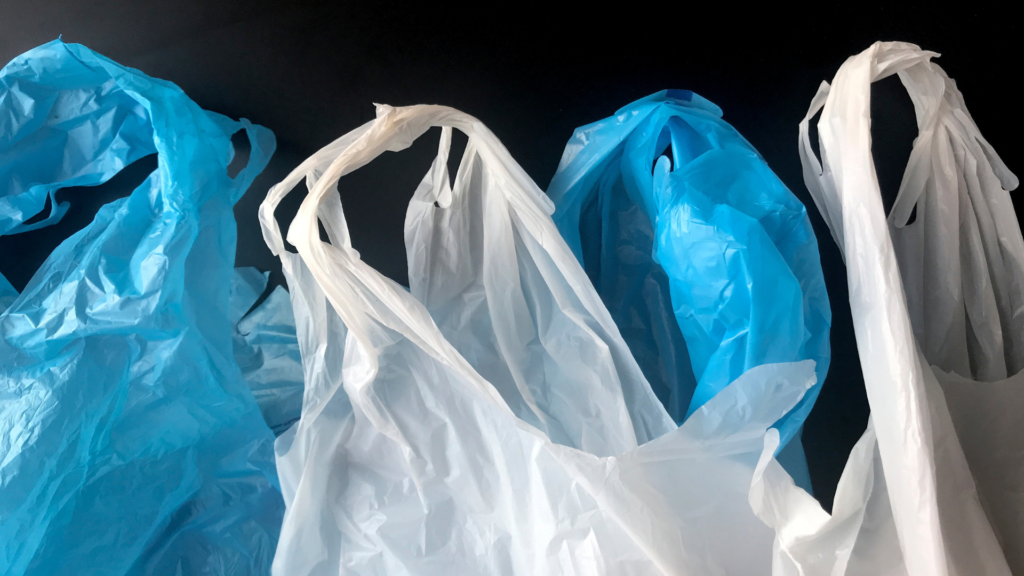
Washington’s statewide bag law is still in place, and single-use plastic carryout bags remain prohibited. Retailers may continue to provide compliant paper carryout bags and reusable plastic film carryout bags, but those bags must meet the state’s product, labeling, and pricing requirements.
What changed in 2026
The biggest change this year is the required charge for plastic film bags. As of January 1, 2026, retailers and restaurants must collect $0.12 for each reusable plastic film carryout bag. The required charge for paper carryout bags remains $0.08.
Bag Thickness
The Legislature also delayed the scheduled increase in plastic bag thickness. That means reusable plastic film carryout bags may stay at 2.25 mil through December 31, 2027. The minimum thickness does not increase to 4 mil until January 1, 2028.
Retailers that choose to use 4 mil or thicker plastic film bags before 2028 are required to charge customers $0.16 per bag. That includes the regular $0.12 pass-through charge plus an additional $0.04 penalty that must be deposited into the state’s waste reduction, recycling, and litter control account.
What retailers should remember
Retailers should make sure the bags they are using actually meet Washington’s standards. Paper bags must meet recycled-content or renewable-fiber requirements and be labeled accordingly. Reusable plastic film bags must meet durability, recycled-content, thickness, and labeling requirements, including showing the bag’s thickness and that it is reusable.
Retailers should also make sure all applicable bag charges and penalties appear on the customer receipt.
Penalties for Non-Compliance
Retailers should also be aware that the law includes an enforcement provision. Violations are subject to a civil penalty of up to $250 per day, with each day of noncompliance treated as a separate violation. Ecology says it will generally follow up with the business and work with management to bring the store into compliance, but repeated noncompliance may result in fines.
What may count as non-compliance: This can include providing prohibited single-use plastic carryout bags, charging less than the required minimum bag fee, charging exempt customers using qualifying food benefits, using paper or reusable plastic bags that do not meet state product standards, or failing to correctly apply the temporary $0.16 total charge for 4 mil or thicker plastic film bags. Violations are subject to a civil penalty of up to $250 per day.
What retailers should do now
- Review bag inventory to confirm thickness, labeling, and product specifications
- Update POS systems so the correct bag charge is automatically applied
- Check receipts to make sure bag charges appear clearly
- Train front-end staff on the 2026 pricing rules
- Flag any 4 mil plastic bags currently in use, since those require a $0.16 total charge through the end of 2027
Bottom line
To ensure retailers are compliant, ensure the following: $0.08 for compliant paper bags, $0.12 for compliant reusable plastic film bags, and $0.16 total for 4 mil or thicker plastic film bags through December 31, 2027. Now is a good time to make sure store teams and systems are aligned.