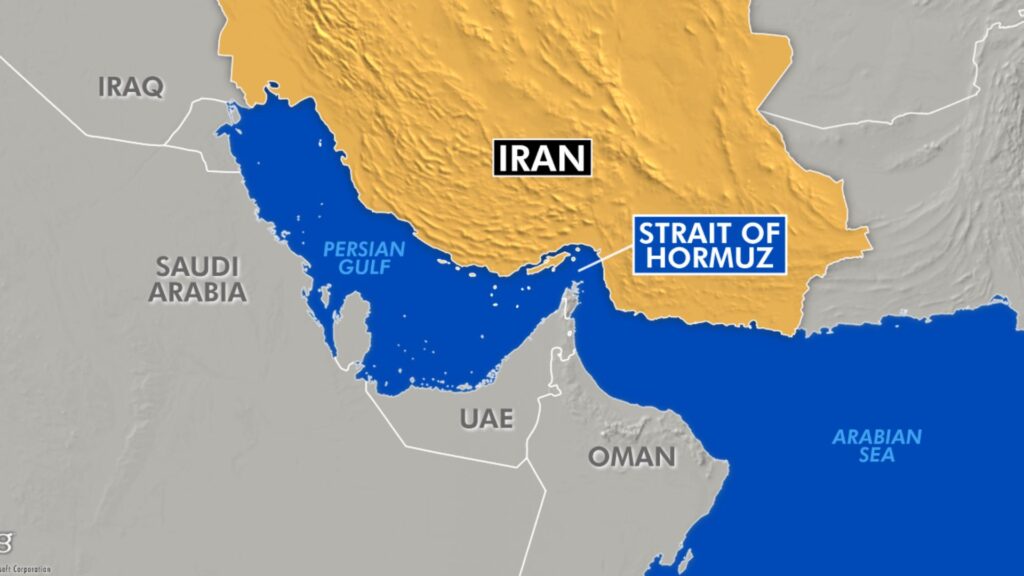
The Strait of Hormuz, a narrow maritime route between Iran and Oman that handles a significant share of the world’s crude oil and liquefied natural gas exports, has been effectively closed to commercial shipping amid escalating conflict in the Middle East. This strategic chokepoint normally carries roughly 20 % of global seaborne crude oil and a large portion of LNG, making it critical to international energy markets.
Global oil prices responded quickly. Brent crude prices climbed above $80 per barrel, reflecting traders pricing in the risk of sustained supply disruption. Analysts from firms such as Goldman Sachs estimate that a prolonged closure could lift oil prices at least $10–$15 per barrel above normal levels, and some market observers say prices could head toward or above $100 per barrel if shipping remains halted.
These higher crude oil costs are transmitting into higher gasoline prices for consumers. In the United States, average pump prices have risen sharply, one report noted that U.S. regular gasoline jumped by 11 cents in a single day, reaching above $3.10 per gallon, the largest daily increase in four years.
In Washington State, pump prices are already significantly above the national average amid the broader energy price surge. As of early March 2026, residents are paying well over $4 per gallon on average, with prices in parts of the state rising roughly 43–53 cents in the past month and standing about 45 % higher than the U.S. average in some areas. AAA data show Washington’s average has been among the highest in the country.
Local analysts attribute part of the near-term increase to the global oil market’s reaction to the Strait of Hormuz disruption, noting that oil price volatility is a major driver of gasoline costs even in regions like Washington that do not import oil directly through the strait. Forecasts from market tracking groups suggest Washington drivers could see a further $0.15–$0.30 per gallon rise in gasoline if elevated oil prices persist in coming weeks.
While local prices also reflect regional supply chain factors, the disruption in global crude flows plays a clear role in pushing pump prices higher, as higher crude costs tend to filter through to retail fuel over time.