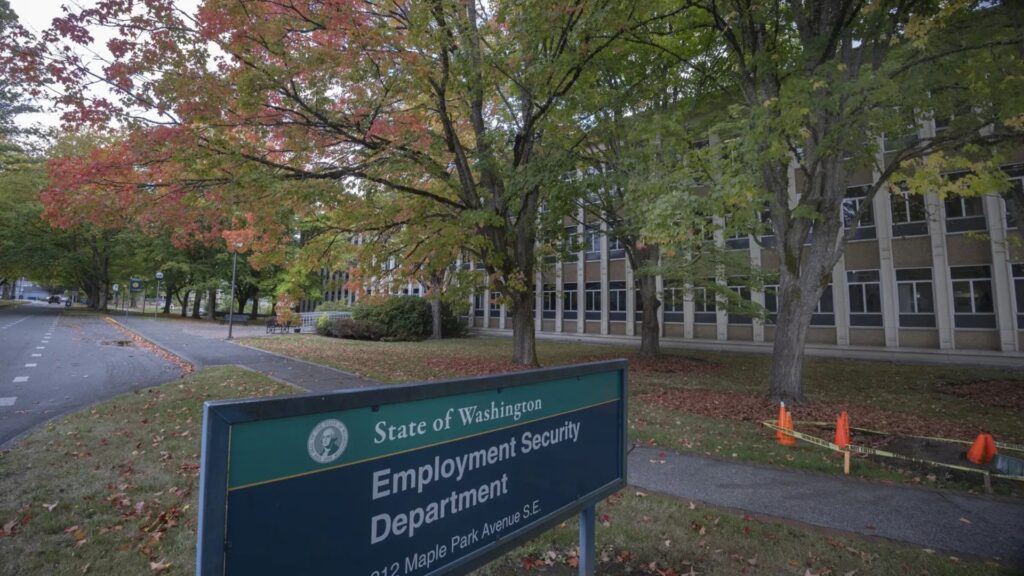
At the Employment Security Department in Olympia, the paid family and medical leave program has seen astounding growth in less than six years of existence, writes the author. (Ellen M. Banner / The Seattle Times, 2025)
Special to The Seattle Times
Jan. 21, 2026
Olympia, we have a problem. And no, it’s not just the billion-dollar shortfall facing the general fund that you might have already heard about. Three programs comprising the backbone of Washington’s social-insurance safety net — paid family and medical leave, unemployment insurance and workers’ compensation — all are quietly facing severe fiscal turmoil.
At the Employment Security Department, the paid family and medical leave program has seen astounding growth in less than six years of existence. By 2022, after being notified that PFML was facing insolvency, lawmakers took action based on stakeholders’ recommendations to get the program back on track. But even with those changes, program use has continued to skyrocket and benefit costs have repeatedly ballooned following new legislation.
Once again, ESD projects the program is headed toward drastic insolvency. Estimates show PFML being at least $350 million in the red by 2029.
If structural changes aren’t made soon to stabilize what has become an unsustainable program, it may go belly-up. Legislators need to rein in the program’s excesses before it goes bankrupt. We must also ensure that any bill expanding the program is reviewed by the Legislature’s fiscal committees.
ESD also projects new trouble ahead for the state’s unemployment insurance program. Until recently, Washington has enjoyed one of the most stable UI programs in the country, while providing the highest benefit available nationally. It’s why we were able to get through the pandemic and provide for workers without taking federal loans like many other states.
But a new analysis of the UI fund now shows there will not be enough in the fund to cover the reserves required by law. The agency’s fix? A “solvency surcharge” — that’s Olympia-speak for about $700 million in additional taxes imposed on employers. Rather than force even more taxes on business, especially taxes automatically imposed without legislative input, we need to explore possible program changes that would avoid the need for a tax in the first place.
At the Department of Labor & Industries, things aren’t any better. Driven by recent bills and policy changes that affect ongoing claim durations and the growth of costly post-traumatic stress disorder claims, L&I has been quietly spending more and more on workers’ compensation claims while taking in less. The department currently estimates that for every dollar collected in premiums, it spends $1.80 in benefits.
In response, L&I has been subsidizing rates by dipping into backup reserves year after year to keep rates down — this year to the tune of about $240 million. But this method of artificially keeping rates low unsustainably masks the real problem. We must take a hard look at what’s driving up these costs and get them under control. And my fellow legislators need to put the brakes on bills that appear to add new bells and whistles to workers’ comp but just drive up costs.
Notably, because these programs are funded through accounts separate from the state’s general fund, legislation surrounding these three programs often skips the traditional fiscal-committee review. Despite proposals burdening these accounts by millions of dollars, they’ll often never come before the Senate Ways and Means or House Appropriations committees. This allows bills to pass into law without the scrutiny they deserve.
Legislation has been filed to address some of these problems during this year’s session. Senate Bill 5889 would limit supplemental benefits for public employees’ leave while on paid family medical leave. Senate Bill 5927 would cap the rate of increase for future workers’ compensation cost-of-living adjustments. These proposals are just the start. Similar bills are likely to be introduced soon.
The lack of true oversight put us in the situation we’re in today. Olympia must get serious about fixing these programs before it’s too late.
Mark Schoesler: is a Republican state senator from Ritzville representing the 9th Legislative District and is a member of the Senate Ways and Means Committee.