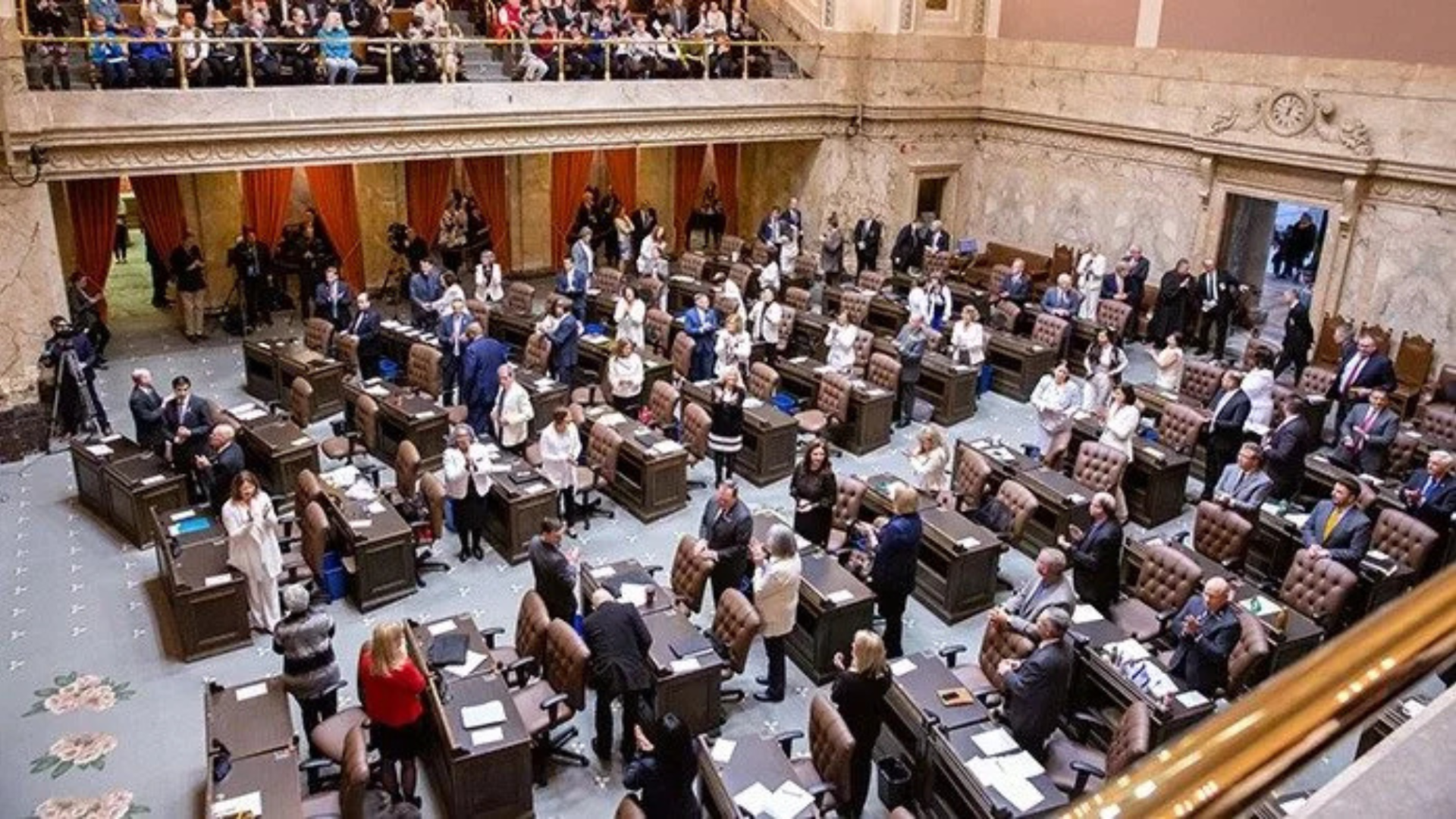
WR is closely monitoring the bills that have advanced through the legislative process. Each week, we’ll spotlight our weekly “hot list” key legislation that could have the most significant impact on WR members.
Commercial Electronic Mail Act (CEMA) (SB 5676/HB 2274)
Washington’s Commercial Electronic Mail Act (CEMA) is being aggressively exploited following a recent Washington Supreme Court decision (Brown v. Old Navy), which ruled that certain routine marketing email subject lines can be considered misleading. The law allows $500 per email violation, does not require proof of actual harm, and carries a four-year lookback, creating massive financial exposure for businesses.
Since the ruling, Washington has seen a sharp spike in lawsuits—many driven by out-of-state trial firms—targeting commonplace marketing language (e.g., “last chance,” “up to X% off,” holiday promotions). Each email counts as a separate violation, creating multimillion-dollar—and potentially billion-dollar—liability risks, especially for Washington-based companies or those with marketing operations in the state. Similar abuse of privacy statutes in California has resulted in over 1,500 lawsuits, underscoring the urgency.
Retailers report these cases are extremely difficult to dismiss early, forcing costly, fact-intensive litigation even when companies believe they complied with the law. This disproportionately harms mid-sized and Washington-based businesses and undermines the state’s business climate.
In response, the Washington Retail Association and partners are pursuing a legislative fix to close the loophole while preserving legitimate consumer protections. A bipartisan strategy is underway, with Senate and House sponsors identified, coalition-building across industries (retail, airlines, cruise lines), and rapid bill drafting aimed at introduction in the 2026 session. Key challenges include the short legislative session, the need for rapid lawmaker education, and anticipated resistance from trial attorneys.
In response, the Washington Retail Association and partners are pursuing a legislative fix to close the loophole while preserving legitimate consumer protections. A bipartisan strategy is underway, with Senate and House sponsors identified, coalition-building across industries (retail, airlines, cruise lines), and rapid bill drafting aimed at introduction in the 2026 session. Key challenges include the short legislative session, the need for rapid lawmaker education, and anticipated resistance from trial attorneys.
Position: WR supports this bill.
Textile EPR (HB 1420)
This bill proposes a textile Extended Producer Responsibility (EPR) program and closely mirrors California’s law, making it particularly relevant for retailers operating in both states. Sponsored by Rep. Reeves, the bill has been developed through a collaborative interim process and is expected to be introduced as a substitute bill based on stakeholder feedback. Despite these efforts, the sponsor and key legislators agree the bill is not ready this session, and WR cannot support it at this time. While there is interest in a future version that could align with California’s assessment model to reduce costs, momentum appears limited this session.
Position: WR opposes this bill.
Immigrant Workers Protection Act (HB 2105)
Though this bill models California’s Immigrant Worker Protection Act passed in 2017, the initial bill version would greatly expand both compliance requirements and penalties well beyond California’s model, including private right of actions and high fines that are multiplied by the number of WA–based employees.
Position: WR has concerns with this bill.
ORC Sentence Enhancements (HB 2209)
Rep. Mari Leavitt (D-28) introduced a replacement Organized Retail Crime bill, building on last session’s HB 1276, adding sentencing enhancements tied to the aggregate value of stolen goods. WR has worked closely with the sponsor and stakeholders to address prior concerns and build support, including from King County. WR, alongside WFIA, Northwest Grocers, and WARCA, continues proactive education and lawmaker engagement on ORC and retail theft.
Position: WR supports this bill.
Medical Provider Network (SB 5847)
If implemented, this bill will reverse some of the Medical Provider Network reform in 2011 — shift medical benefit management toward much greater provider discretion, increased worker access out of network, very tight Utilization Review deadlines, long-tail medical obligations, and for self-insured employers, greatly increased risk of “Good Faith and Fair Dealing” strikes over allegations of directed care.
Position: WR opposes this bill.