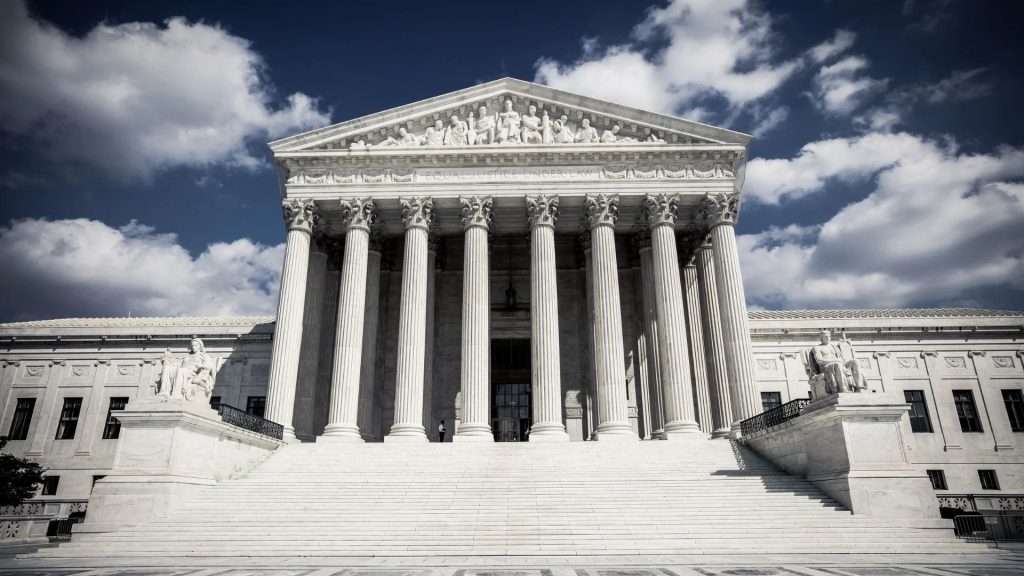
The U.S. Supreme Court has returned a legal challenge involving Washington’s legislative district boundaries to a lower court for further review, potentially reopening the state’s political maps before the next scheduled redistricting in 2031. The court’s October 5 action will not affect the November 2026 election.
The case centers on the 15th Legislative District in the Yakima Valley and whether its boundaries weaken Latino voters’ ability to participate equally in elections. Latino voters challenged the map approved by Washington’s redistricting commission and Legislature in 2022, arguing that the district’s boundaries included areas with historically lower Latino voter turnout while excluding communities with stronger political participation.
In 2024, U.S. District Court Judge Robert Lasnik agreed with the plaintiffs and established new boundaries intended to strengthen Latino voters’ electoral influence. The revised map shifted more than 300,000 people across 13 legislative districts in eastern and western Washington. The 9th U.S. Circuit Court of Appeals upheld the decision in 2025.
State Rep. Alex Ybarra, R-Quincy, and Jose Trevino subsequently challenged the revised boundaries, asking the Supreme Court to review the case. Their appeal gained significance following the court’s April 2026 ruling in Louisiana v. Callais, which changed how the federal Voting Rights Act applies to redistricting and limited the circumstances in which race can be considered when drawing district boundaries.
The Supreme Court has now directed the lower court to determine whether Lasnik’s 2024 decision complies with the updated legal standards. Washington Attorney General Nick Brown had also asked the justices to return the case to the lower court for that assessment.
Attorneys representing the original Latino voters said they intend to defend the revised map, arguing that it has provided Yakima Valley voters with a more equal voice in state legislative elections.
The outcome could affect the boundaries of multiple legislative districts and influence future elections. However, the timing and scope of any potential changes remain uncertain and will depend on the lower court’s review.