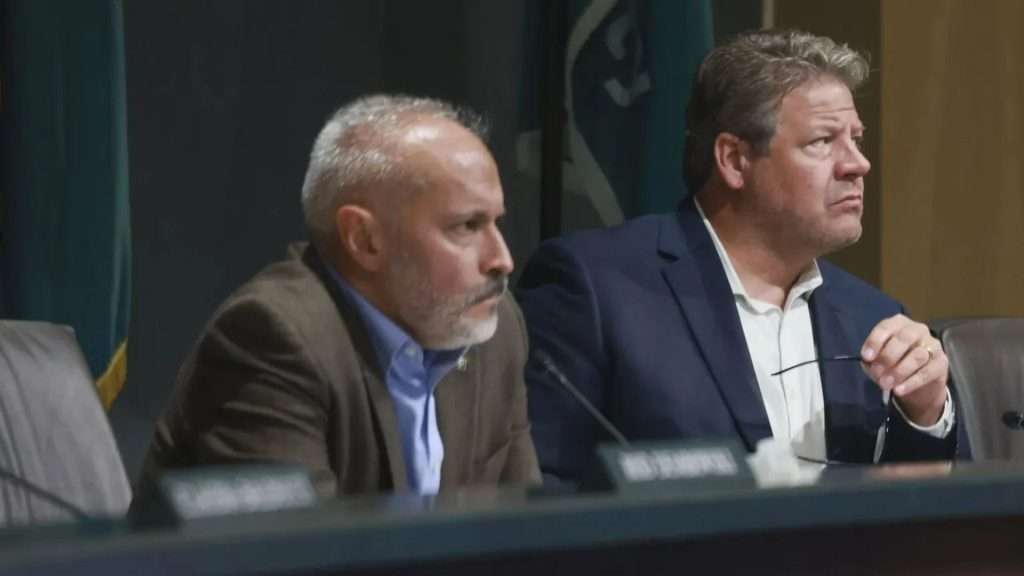
King County Councilmembers Jorge Barón, left, and Reagan Dunn, right, listen to public commentary at the King County Courthouse. The County Council passed another new tax Tuesday with no clear spending plan. Barón… (Ivy Ceballo / The Seattle Times, file)
The King County Council approved a 0.01% sales tax increase on October 6 to fund services for children and families experiencing homelessness, including emergency shelter, rental assistance, childcare, and youth programs. The ordinance passed 6-3 and is expected to generate up to $10 million annually for three years, beginning January 1, 2027.
The increase adds one cent to a $100 retail purchase and is estimated to cost the median taxpayer about $4 annually. In Seattle, the sales tax rate will rise to 10.56%. State legislation enacted earlier this year authorized counties and cities to adopt the tax without a public vote. If individual cities impose the same tax, their collections will be deducted from the county’s share to prevent duplicate taxation.
Supporters say the funding is needed to address a shortage of shelter beds for children and families. Councilmember Jorge Barón, who sponsored the measure, said he hopes most of the revenue will support youth shelter and related services. County Executive Girmay Zahilay has also proposed using some of the funding for a tiny home village and additional youth shelter beds. Specific allocations will be determined through a future budget process.
The broad spending authority has drawn criticism from some council members and concerns from county staff. A staff analysis noted that the ordinance gives the executive significant discretion without establishing a detailed spending plan or specific allocation requirements. Opponents questioned whether additional taxes should be approved before stronger accountability measures are in place.
Those concerns follow scrutiny of other county-funded programs. A recent investigation into the Best Starts for Kids program identified improper payments and possible fraud. The county also suspended a contract with Urban Family over allegations of duplicate billing totaling $261,000. The allegations are separate from the newly approved tax program.
Supporters argue that the immediate needs of unsheltered children and families warrant action, while critics emphasize the importance of clear spending priorities and oversight. The debate highlights continuing questions about how local governments balance urgent social service needs, taxpayer costs, and accountability for public funds.